About
I'm a high school student and researcher interested in applying machine learning to problems in biology and medicine. My work focuses on computational pathology, spatial transcriptomics, and clinical prediction, with an emphasis on extracting meaningful biological insights from complex data. Through my research, I've explored how computational models can help us understand disease at both the cellular and patient levels. I'm particularly interested in developing methods that are not only technically rigorous but also practical and accessible in real-world healthcare settings. Beyond research, I enjoy building software, organizing opportunities for other students, and exploring new ideas across computer science and biology.
Work Experience
Skills
Check out my latest work
I've worked on a variety of projects, from Vision Transformers to Generative Adversarial Networks (GANs). Here are a few of my favorites:
Stryker
Implemented a transformer-based architecture for multi-label soccer action recognition on SoccerNet-v2. Integrated DINOv2 frame embeddings with a 6-layer temporal Transformer encoder and multi-head self-attention. Achieved ~60% micro-F1, demonstrating effective modeling of long-range temporal dependencies.
DCGAN and Latent Space Exploration
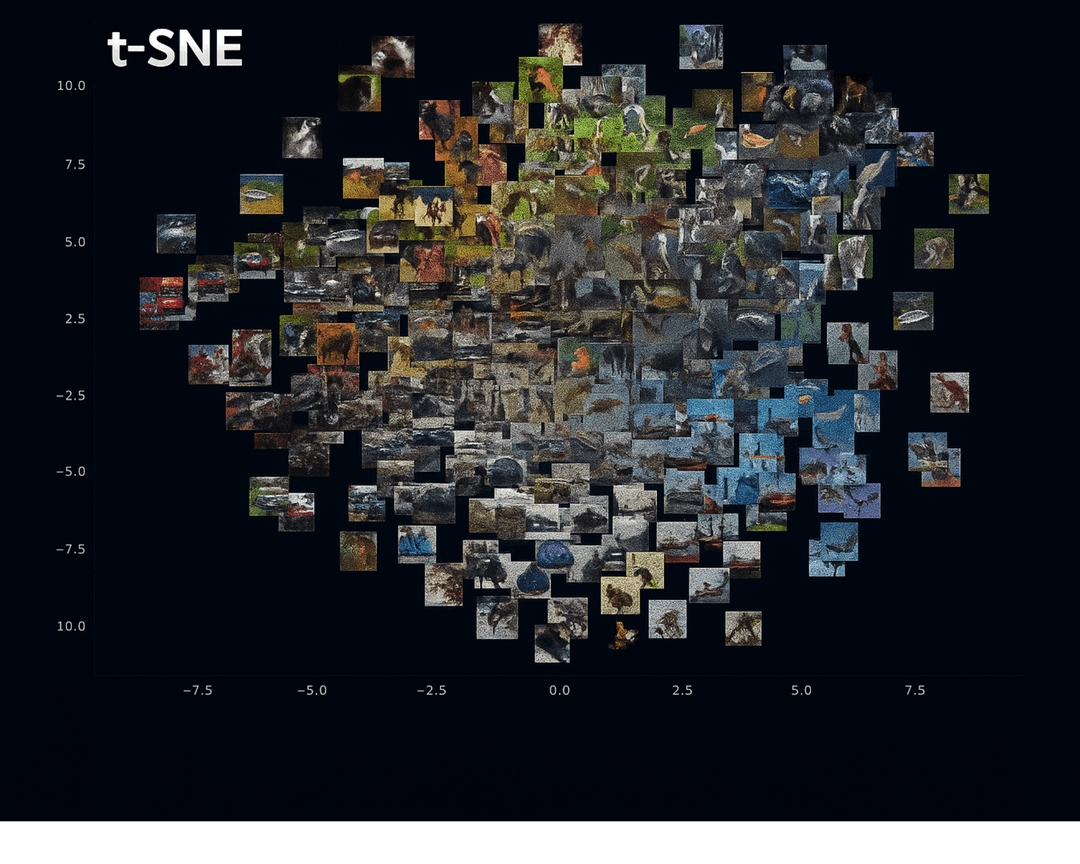
Trained a Deep Convolutional GAN on CIFAR-10 and explored the generator’s latent space using PCA, SLERP, and t-SNE. Identified disentangled axes of variation corresponding to semantic factors. These analyses provided insight into how the GAN encodes visual concepts internally and helps understand generative representations.
Counterfactual Explanations in Models
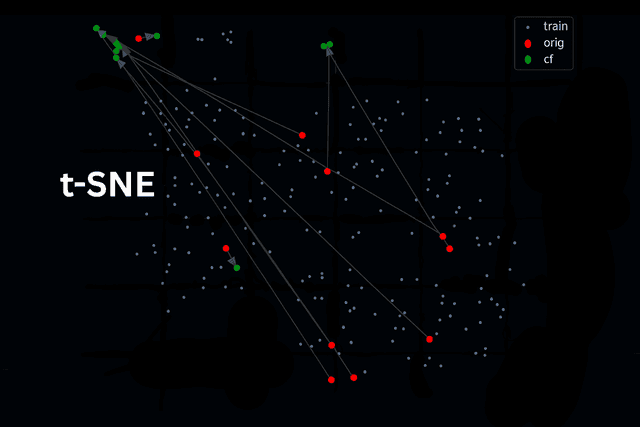
Built a counterfactual explanation framework combining XGBoost, PyTorch models, and a VAE for plausibility scoring. Benchmarked DiCE, gradient-based, surrogate, and genetic search CFs, evaluating validity, sparsity, and interpretability. Visualized results with boxplots, t-SNE maps, and patient records.
Sequence To Sequence GRU
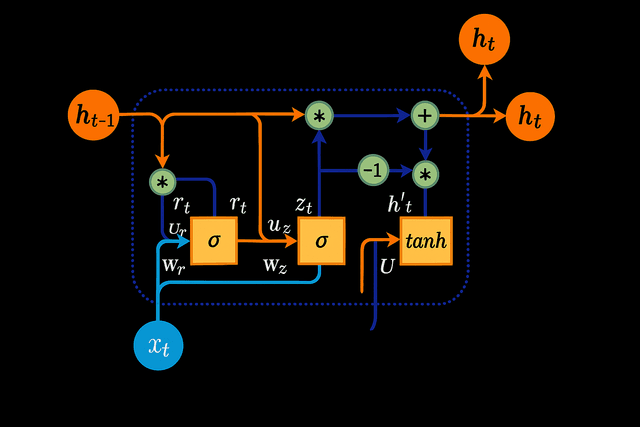
Developed a GRU-based encoder-decoder model in PyTorch that converts numeric sequences (e.g., 123) into English words (one two three). It uses teacher forcing during training, cross-entropy loss, and greedy decoding to handle variable-length sequences accurately, demonstrating sequence-to-sequence modeling for real-world applications.
I like building things
I have participated in several hackathons, applying machine learning, software engineering, and data-driven problem solving:
- V
VikingHacks 2026
Pleasanton, CA
Built a forensic surveillance platform that tracks individuals across camera feeds, generates millisecond-precise investigation timelines, and enables natural language evidence queries using custom computer vision pipelines. - C
CogniHacks 2025
Pleasanton, CA
Built an ML-powered healthcare tool that transcribes doctor-patient conversations, extracts medical entities, and generates summaries to improve patient adherence. - L
Los Altos Hacks IX
Sunnyvale, CA
Built an ML-powered platform that forecasts food demand, classifies inventory, and optimizes redistribution to reduce waste and fight hunger. - B
Blu's Hacks 2025
Los Gatos, CA
AI-powered cross-platform app that tracks pantry inventory via OCR and recommends recipes based on available ingredients. - H
Hackakhan
Mountain View, CA
Developed an AI-powered platform that connects students with skilled tutors and intelligent tools to provide personalized support in their school subjects. - M
Mateo Hacks
San Mateo, California
Developed a machine learning model to detect and interpret sign language gestures, enabling real-time communication.
Get in Touch
Feel free to email me with any questions, or collaboration opportunities. I’ll get back to you as soon as I can. varshithgude.cs@gmail.com